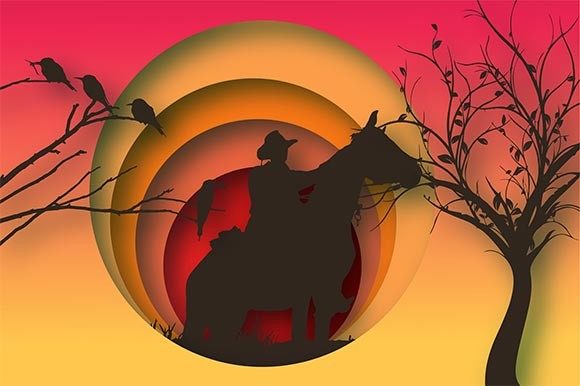
3D Cowboy Paper Cutout
In the world of digital design, few themes evoke as much immediate character and visual interest as the classic Western aesthetic. Whether you are crafting a playful children’s book, designing a rugged brand identity for a craft brewery, or creating eye-catching social media assets, the "Wild West" offers a rich palette of symbols: hats, boots, lassos, and saloons. However, translating these two-dimensional concepts into designs that feel dynamic and modern can be a challenge. This is where the 3D Cowboy Paper Cutout becomes an invaluable asset for designers, marketers, and content creators.
This specific design element bridges the gap between flat vector simplicity and complex 3D rendering. By utilizing a layered paper-cut style, designers can achieve depth and texture without the heavy processing power required for full 3D modeling software. The result is a versatile, high-impact graphic that stands out in crowded digital spaces while remaining lightweight and easy to manipulate.
Understanding the Design Concept
At its core, a 3D Cowboy Paper Cutout is a digital illustration technique that mimics the look of physical paper crafts. It relies on distinct layers separated by subtle shadows to create the illusion of depth. When applied to a cowboy theme, this means every element—from the wide-brimmed hat to the spurs on the boot—is treated as a separate piece of colored paper stacked upon another.
The primary advantage of this approach is scalability and editability. Unlike a standard JPEG photograph, which is fixed in its composition, a Editable 3D Cowboy Paper Cutout Background open vector file allows you to tweak colors, resize individual components, and rearrange elements to fit your specific layout. This flexibility is crucial for professionals who need to adapt their designs across various mediums, from small business cards to large outdoor banners.
Solving Common Design Challenges
Many designers face a common dilemma when working with themed illustrations: they want unique, custom graphics but lack the time or budget for bespoke illustration work. Stock photos often feel generic, and complex 3D renders can be difficult to integrate seamlessly into flat UI designs. The 3D Cowboy Paper Cutout solves these issues by offering a middle ground.
- Visual Hierarchy: The layered nature of the cutout naturally draws the eye. You can use the depth to highlight key information, such as a brand name or a call-to-action button, by placing it in the foreground layer.
- Brand Consistency: Because the file is editable, you can easily swap the traditional brown and tan color palette for your brand’s specific hex codes. This ensures that even a whimsical cowboy theme feels cohesive with your overall marketing strategy.
- Cross-Platform Versatility: A single design source can be adapted for multiple uses. The same cutout that works perfectly on a website header can be resized and simplified for a mobile app icon or printed on merchandise.
Practical Applications Across Industries
The utility of this design extends far beyond simple decoration. Here is how different professionals can leverage the 3D Cowboy Paper Cutout to enhance their projects.
Digital Marketing and Social Media
For social media managers, engagement is key. Static images often get lost in the scroll, but designs with perceived depth tend to perform better. Using the 3D Cowboy Paper Cutout for YouTube banners or Instagram story highlights adds a playful yet professional touch. You can animate the layers slightly using tools like After Effects to create a parallax effect, making the cowboy appear to move as the user scrolls. This dynamic quality increases dwell time and interaction rates.
Publishing and Education
Authors and educators targeting younger audiences find immense value in this format. For children’s games or educational worksheets about history, the paper-cut style is approachable and non-threatening. It simplifies complex historical figures into friendly, recognizable characters. Teachers can print these cutouts for classroom activities, or authors can use them in e-books to break up text-heavy sections, keeping young readers engaged.
Branding and Print Materials
Small businesses, particularly those in the food and beverage sector (like BBQ joints or western wear shops), often struggle to convey their vibe quickly. A business card featuring a crisp, high-resolution 3D Cowboy Paper Cutout immediately communicates the brand’s personality. The 300 DPI resolution included in the download ensures that when printed, the edges remain sharp and the colors vibrant, avoiding the pixelation that often plagues low-quality stock assets.
Technical Benefits and Workflow Integration
One of the most significant advantages of this product is the file format availability. Designers receive a zip file containing Editable AI, EPS, and JPEG 300 DPI versions. This variety caters to different stages of the design workflow.
The AI and EPS files are essential for the creative process. These vector formats allow you to scale the image to any size without losing quality. More importantly, because the layers are grouped and labeled (in most well-structured files), you can isolate specific parts of the cowboy figure. Need to change the shirt color? Just select the path and fill it with a new color. Want to remove the hat to reveal a different hairstyle? Simply delete that layer. This level of control saves hours of manual tracing or redrawing.
The JPEG 300 DPI version serves as a ready-to-use asset for platforms that do not support vector editing, such as certain website builders or email marketing templates. It provides instant gratification for users who need a quick, high-quality image without opening Adobe Illustrator.
Considerations for Implementation
While the 3D Cowboy Paper Cutout is highly versatile, successful implementation requires a thoughtful approach to composition. Since the design has inherent depth, it is important not to clutter the background. Pair the cutout with ample negative space to let the character breathe. Additionally, consider the lighting direction implied by the shadows in the cutout. If your background has a light source coming from the left, ensure the shadows on the cowboy align with that direction to maintain realism within the stylized context.
Furthermore, think about the emotional tone you wish to convey. The cowboy archetype can range from rugged and serious to whimsical and cartoonish. By adjusting the color saturation and the thickness of the shadow layers, you can shift the mood of the design. Bright, saturated colors with soft shadows create a friendly, inviting atmosphere suitable for family-friendly brands. In contrast, muted earth tones with sharper, darker shadows can evoke a more authentic, vintage Western feel.
Conclusion
Incorporating a 3D Cowboy Paper Cutout into your design toolkit offers a powerful blend of aesthetic appeal and technical efficiency. It addresses the need for distinctive, scalable graphics that work seamlessly across digital and print mediums. Whether you are updating your website, designing a book cover, or creating engaging content for YouTube, this editable vector asset provides the flexibility and quality needed to make your project stand out. By leveraging the layered structure and high-resolution outputs, you can create designs that are not only visually stunning but also deeply aligned with your brand’s message.