3d Eagle SVG, 4th of July Patriotic SVG: A Practical Guide to Crafting Success
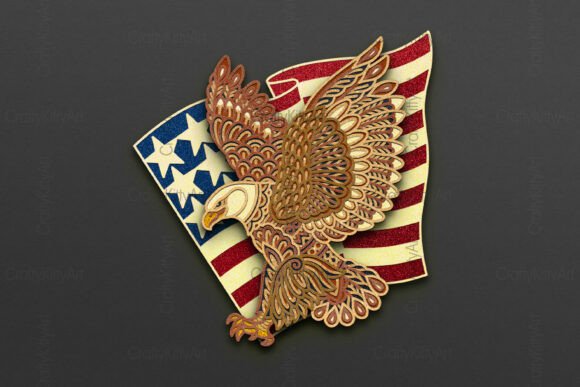
When you are looking for a design that captures the spirit of American independence without feeling cliché, the 3d Eagle SVG, 4th of July Patriotic SVG stands out as a versatile and powerful option. It is not just another clipart image; it is a meticulously crafted vector file designed to bring depth and dimension to your patriotic projects. Whether you are preparing for a summer barbecue, creating marketing materials for a small business, or designing custom apparel for a community event, this specific design offers the structural integrity needed for high-quality results.
The appeal of this design lies in its complexity and adaptability. Unlike flat, two-dimensional icons that can look dated or simple, the 3D effect gives the eagle a commanding presence. However, simply downloading a file does not guarantee a successful project. Many creators overlook critical details regarding file compatibility, material selection, and software settings, leading to frustrated crafting sessions and wasted materials. This guide aims to help you navigate those pitfalls, ensuring that your final product looks as professional as the digital preview suggests.
Understanding the File Format Advantage
One of the most significant advantages of choosing a vector-based design over a raster image (like a standard JPEG) is precision. The 3d Eagle SVG, 4th of July Patriotic SVG comes as an 11-layer design, which might sound technical, but it translates directly into better cutting and engraving outcomes. Each layer represents a distinct part of the eagle’s anatomy or shading detail, allowing your machine to handle intricate cuts with ease.
However, beginners often make the mistake of assuming all SVG files work the same way across different platforms. While the SVG file is compatible with Cricut Design Space and Glowforge, the DXF and PNG versions serve specific purposes that require different handling. If you are using a CNC laser machine or Silhouette Studio, relying solely on the SVG file might lead to compatibility errors or lost layers. Always verify that you have downloaded the correct file type for your specific hardware. For instance, the DXF file is optimized for Silhouette Studio and various CNC applications, ensuring that the complex curves of the eagle’s wings translate accurately to wood or acrylic.
Why Layering Matters for Quality
The 11-layer structure is not merely a feature; it is a quality control measure. When you import this design into your cutting software, you will notice that the layers are separated. This allows you to:
- Experiment with Colors: You can assign different colors to different layers before cutting. This is particularly useful if you are making layered paper crafts or vinyl decals where contrast creates the 3D illusion.
- Adjust Opacity and Positioning: In some software, separating layers allows for subtle adjustments in positioning to enhance the depth effect.
- Isolate Errors: If one part of the design fails to cut cleanly, you can troubleshoot that specific layer without re-cutting the entire eagle.
Ignoring this layering potential by treating the design as a single monolithic shape is a common error. It reduces the visual impact of the 3D effect and limits your creative flexibility. Take the time to explore the layers in your software interface. You may find that adjusting the color of the inner wing feathers versus the outer body adds a level of sophistication that a single-color cut cannot achieve.
Material Selection: Beyond Cardstock
A frequent misunderstanding among hobbyists is limiting their material choices to standard cardstock because they are used to paper crafting. While the 3d Eagle SVG, 4th of July Patriotic SVG works beautifully on colored cardstock, its true versatility shines when applied to more durable materials. The design measures 7.5 inches on the longest side, a perfect size for signage, coasters, or decorative plaques.
If you are new to laser cutting or CNC routing, you might hesitate to try harder materials like plywood, MDF, or acrylic. This hesitation often stems from fear of damaging equipment or producing poor results. However, avoiding these materials means missing out on the premium finish that defines professional-grade patriotic decor. Here is how to approach different materials effectively:
- Wood and Plywood: Use medium-density fiberboard (MDF) or birch plywood for a clean cut. Ensure your blade is sharp enough to handle the density without charring the edges excessively. The natural grain of wood complements the rugged aesthetic of an eagle.
- Acrylic and Plexiglas: These materials offer a modern, sleek look. When cutting acrylic, use a higher speed and lower power setting to prevent melting or fogging around the cut lines. The transparency of clear acrylic can create a stunning light-diffusing effect for night-time displays.
- Metal: For engraved metal signs, ensure your laser has sufficient wattage. Engraving rather than cutting through thick metal preserves the structural integrity while highlighting the detailed 3D contours of the design.
Another critical mistake is ignoring the thickness of the material. Vector designs are mathematical representations of shapes, but physical materials have depth. If you are stacking layers of cardstock to create a dimensional effect, you must account for the gap between layers. Failing to do so can result in a design that looks cramped or misaligned when assembled.
Software Settings and Color Management
The preview images you see online are examples only. They are designed to inspire, not to dictate your final output. A major source of dissatisfaction for users is expecting the digital preview colors to match their physical material exactly. Screen calibration varies wildly, and ink or dye absorption differs based on the substrate. To avoid disappointment, always run a test cut on a scrap piece of your chosen material.
Furthermore, many users struggle with color conversion in their cutting software. When you import the SVG, the software may assign default colors that do not match your intended palette. Since the design is vector-based, you can change the size and colors later in your cutting software without losing quality. This is a crucial step. Do not rush to the "cut" button. Instead, spend time adjusting the hue and saturation to match your brand colors or thematic requirements. For example, a deep navy blue for the body and bright white for the highlights can enhance the 3D shadow effect significantly.
Size Considerations
The design is provided at a maximum width of 7.5 inches. While this is a standard size for many projects, scaling it up or down requires attention. Scaling up too much on low-resolution printers (if printing the PNG) can lead to pixelation, though the SVG remains crisp at any size. When scaling the vector file, be mindful of the minimum stroke width. If you reduce the design too much, fine details in the eagle’s feathers may become too thin for your blade or laser to cut accurately, resulting in broken pieces. Conversely, enlarging it excessively on a small mat may exceed the physical limits of your machine. Always check your machine’s maximum bed size before finalizing your dimensions.
Evaluating Your Purchase Decision
Before committing to any digital asset, consider your end goal. Are you creating a one-off gift or mass-producing items for sale? The 3d Eagle SVG, 4th of July Patriotic SVG is robust enough for commercial use, but you must ensure you understand the licensing terms associated with the purchase. Some designers restrict commercial use on certain file types or require attribution. Reading the fine print protects your business reputation and avoids legal complications.
Additionally, compare this design against simpler alternatives. Sometimes, a less complex design yields a faster production time, which is crucial for high-volume orders. However, if your selling point is premium quality and intricate detail, the 11-layer complexity of this eagle design justifies the extra setup time. It offers a tangible value proposition to customers who appreciate craftsmanship.
Final Thoughts on Execution
Success with the 3d Eagle SVG, 4th of July Patriotic SVG comes down to preparation and patience. By understanding the nuances of file formats, selecting appropriate materials, and managing your software settings correctly, you transform a simple digital download into a polished, professional product. Avoid the trap of rushing through the setup process. Take the time to explore the layers, test your materials, and refine your colors. When you treat the design with the respect it deserves, the result is a striking tribute to patriotism that resonates with viewers and stands the test of time.
Remember, the tools are only as good as the operator. With the right knowledge and a willingness to experiment, you can leverage this versatile design to create memorable projects that highlight both your skill and the enduring symbol of the eagle.